Before approving a component order, obtain RoHS documentation that covers the exact manufacturer part number and identifies any exemptions used. Check its issuer, scope, revision, and relevance to the material being offered. Resolve missing evidence before commitment, with the person responsible for your product's compliance deciding whether the documentation is sufficient.
For OEM and contract-manufacturing buyers, the useful question is whether the offered component has the evidence needed for the intended product. A green catalog badge, a generic company statement, or a lead-free finish description may help start that review. Each still needs a clear connection to the purchasing requirement.
Define the RoHS requirement before requesting documents
This guide focuses on EU RoHS. Establish the destination market, the finished equipment involved, and any customer requirements before sending the RFQ. Ask your compliance owner to confirm the applicable scope and whether your purchasing specification permits exemptions. A customer may require an exemption-free component even when an applicable legal exemption exists.
The European Commission's RoHS overview identifies ten restricted substances, including lead, cadmium, certain flame retardants, and four phthalates. Checking lead alone therefore leaves the broader substance requirement unanswered.
Keep component evidence separate from the finished equipment's conformity assessment. For example, Texas Instruments' RoHS statement, revision T, explains that its semiconductor components generally do not carry the Article 7 CE-marking and declaration-of-conformity obligations that apply to equipment. Request the appropriate material and compliance information for the item you are buying.
Check whether component RoHS documentation covers your order
Start with the manufacturer's official environmental information where available. When a supplier forwards a document, retain its original issuer and revision. Distinguish a manufacturer declaration from a distributor's statement about the goods it supplies.
Review five connections:
- Part identity: Does the document name the complete ordering code, or provide an unambiguous rule covering it? Check package, finish, and other relevant suffixes.
- Product coverage: If it covers a family, are exclusions, options, or material variants explained? Ask for written clarification when the offered version is uncertain.
- Requirement: Does it address EU RoHS and the relevant amendments, rather than an undefined environmental claim?
- Status: Does compliance depend on an exemption? Record the entry and any stated limitations instead of reducing everything to a single yes/no field.
- Applicability: Is the evidence still applicable to this material? Check revision, material-change information, and any manufacturer-defined transition boundaries.
A newly downloaded statement is not automatically evidence for every historical version. Conversely, an older issue date alone does not invalidate an unchanged declaration. Investigate whether the document's scope and the applicable requirements still match the purchase.
Ask for evidence that answers the unresolved question
Different documents serve different purposes. Specify what your review needs rather than requesting every available PDF.
| Document | Useful purchasing question | Review limit |
|---|---|---|
| Manufacturer RoHS declaration | What compliance status is declared for this part or defined family? | Check coverage, amendments, exclusions, and exemptions. |
| Material declaration | Which materials and substances support the assessment? | Check the reported detail and any undisclosed information. |
| Analytical test report | What did the specified analysis find in the identified sample? | Check sample identity, materials examined, substances, methods, and results. |
| Shipment certificate of conformance | What does the supplier attest about this delivery? | Read the actual statement; the document title does not establish chemical testing. |
This distinction has a practical purchasing precedent. Section 8.2 of Celestica's Environmental Requirements for Purchased Components, revision 7, effective June 11, 2024, separates part-level compliance declarations, material declarations, and analytical data requested in some cases. Those are Celestica's requirements, not a universal document package for every order.
If evidence conflicts or leaves a material question unresolved, ask the compliance or quality owner to define the next action. Additional analysis should have an agreed scope. An electrical pass result answers an electrical question; it does not by itself establish restricted-substance compliance.
Separate lead-free claims from RoHS exemptions
A statement about terminal plating does not describe every material inside a component. Likewise, a manufacturer may declare RoHS compliance while using a permitted exemption for a particular application of a restricted substance.
TI's statement illustrates this explicitly: its compliant designations include both parts meeting the substance limits and parts relying on specified exemptions. That is a manufacturer-defined classification to interpret through its documentation, not a naming convention to apply to another supplier's products.
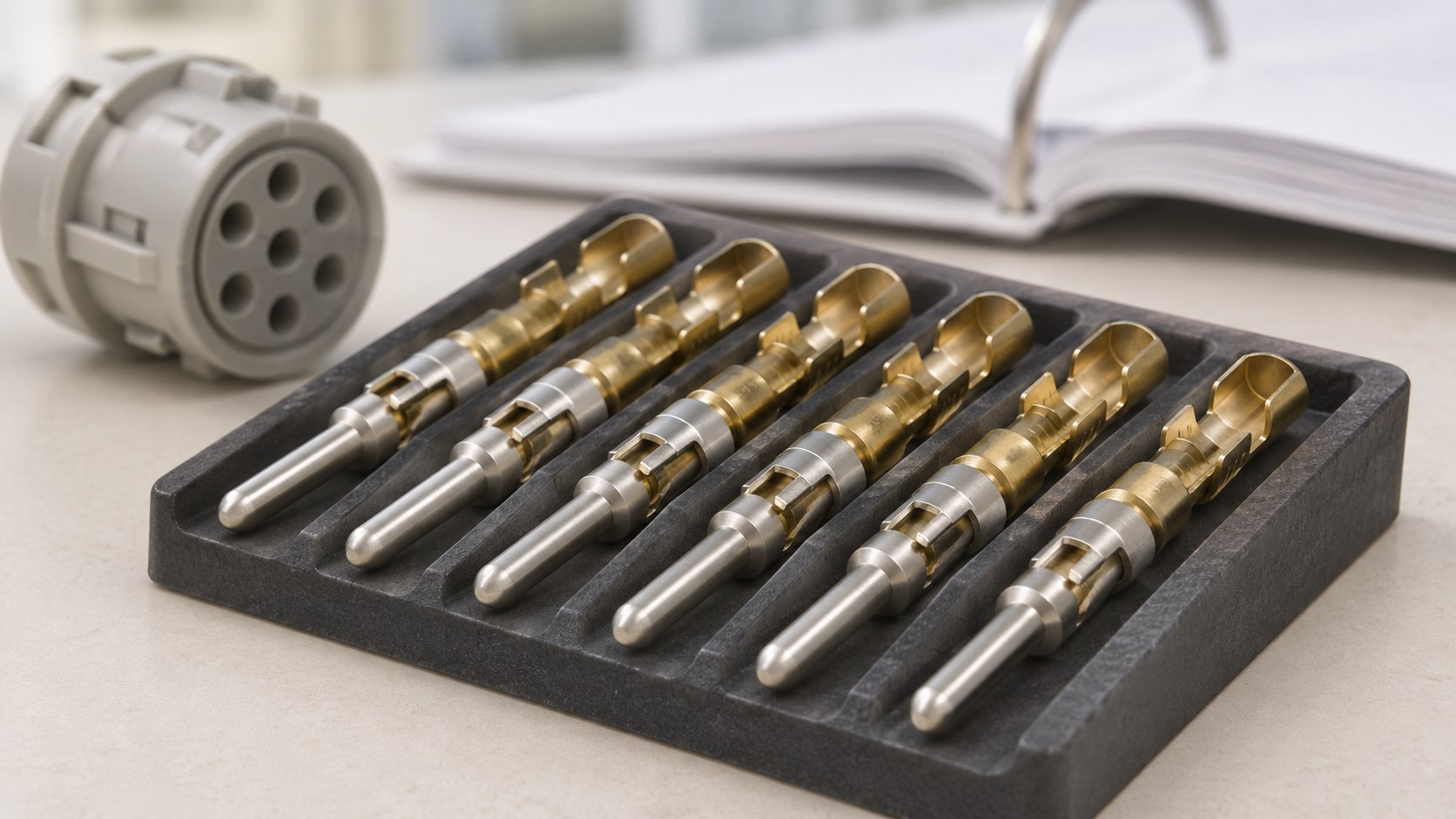
For a quoted connector, for example, ask whether the environmental declaration covers the housing, contacts, finish option, and accessories actually being ordered. A declaration for one constituent cannot automatically settle the status of the complete purchase. Also keep assembly-process compatibility as a separate engineering check.
Review exemptions against the intended use and timing
When an exemption appears, record its full reference and the application it covers. Have the responsible reviewer check the relevant equipment category, conditions, and current status against official information. An exemption for one use is not blanket permission for every use of the same substance.
The Commission's exemption guidance explains that exemptions are time-limited and that existing exemptions with timely renewal applications can remain valid pending a decision. A past date in an old table, or a renewal request mentioned in a supplier email, is insufficient on its own to settle current applicability.
For scheduled purchases, include the planned equipment market-placement timing in the review. Buying a component before an exemption changes does not by itself establish that the future finished product can use it. If the project prohibits exemptions, seek a documented alternative rather than treating internal purchasing approval as a substitute for that requirement.
Hypothetical example: two connector offers, different evidence gaps
An OEM needs 1,500 connector assemblies for a product intended for the EU market. Its specification permits applicable exemptions after compliance review. Both offers match the released electrical and mechanical requirements.
Supplier A provides a family declaration, but the supplied contact finish suffix is absent from its coverage rule. Supplier B provides a manufacturer declaration covering the full ordering code and identifies an exemption used in a contact material.
The buyer should request clarification of Supplier A's suffix coverage and send Supplier B's exemption details to the compliance owner. Neither the missing suffix nor the declared exemption can be resolved by comparing the components' appearance.
If A obtains adequate clarification, its evidence gap may close. If B's exemption applies to the intended equipment and timing, that offer may also remain eligible. The team can then compare documented options on price, delivery, and other purchasing terms. Until those reviews finish, neither offer should be recorded as fully cleared.
Carry the documentation decision into the sourcing request
Put the required declaration, permitted-exemption policy, evidence-review deadline, and document-delivery requirements into the RFQ attachment. Ask suppliers to identify unavailable records and exceptions in their quotations. Confirm what must be reviewed before ordering and what must accompany shipment.
Retain the accepted evidence with the part record and identify when review must reopen, such as a material change, new exemption decision, or changed product destination. Cplus's component PCN review checklist explains how to manage a manufacturer change through the affected BOMs and purchasing decisions.
Cplus Electronics lists semiconductors, passives, and electromechanical parts among its component sourcing products and services. For a relevant enquiry, provide the exact manufacturer and part number, quantity, need date, approved alternatives, and the documentation your compliance owner requires. Ask what evidence is available for each proposed offer.
Submit your component requirement to Cplus using its part-number and quantity fields. The page supports multiple part lines and a shortage-list attachment option, and provides an email route for a spreadsheet or BOM. Include your RoHS requirements in the accompanying requirement sheet so the sourcing review can address usable, documented options.